
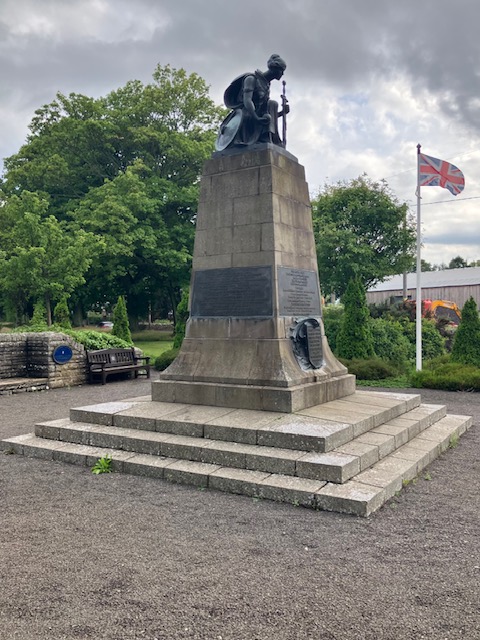
Alyth WW1 War Memorial
WM name reference IWM44752
Current Location:
on the edge of Alyth Muir junction of Airlie Street/Meigle Road Alyth Perth And Kinross Tayside PH11 8DZ
Description:
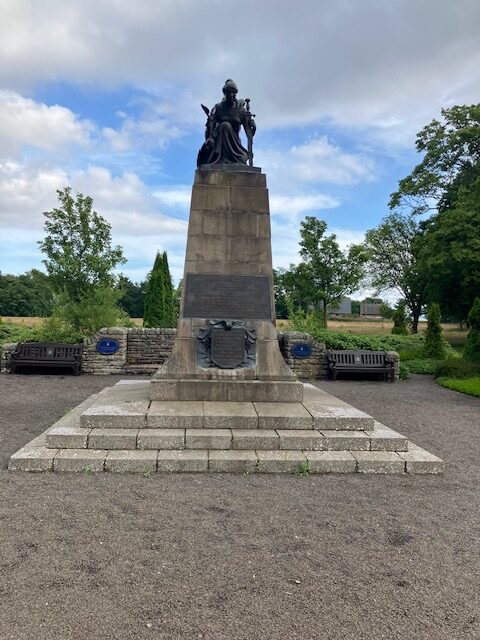
Female figure (Britannia) surmounting a stone plinth and 3 stage stone base. There is a 3 stage stone base, a shield shaped dedication plaque, and a names plaque on each of the 4 faces. The unveiling report shows there were originally railings, presumably removed in WW2. Extract from the Revd James Meikle’s book ‘Places & Place-Names Round Alyth 1925 IN THE arresting War Memorial, by Mr. Kellock Brown, Sculptor, Glasgow, which stands at the corner of the Muir, there is much to be seen; the following extract from the Alyth Guardian will help to suggest ideas and to increase appreciation: “What is meant by the figures of the monument? What are the ideas intended to be conveyed especially by the larger figure? It is evident that the whole statue is full of symbolism, and that the sculptor has presented not an ordinary commonplace but a rare piece of statuary. It challenges thought. “Is it the Goddess of Victory that looks towards the town? If so, it breaks with the past conceptions. No longer, not now, with lips curled with contempt, arrogant, vibrant with the pride of human achievement and the elation of personal triumph, but with a face of intense thought, of profound concern, removed from grief, yet seeming to realise the cost of victory in human lives. Or is it the face of the Goddess of Peace that steadily looks upon the present traffic of living men, and will look upon the generations that follow? If so, then she seems to be still weighing vital issues – perchance that her power is threatened in the future that she cranes forward to pierce. The face is strikingly arrestive, and in no part of the sculptuory has the artist been more successful. The more one looks at it the more one comes under its spell. It stirs, it holds one. “In the conception of the statue, be it the genius of victory or peace, there are other significant meanings. In its half-kneeling posture, the figure suggests a success wrested, when almost beaten down, from a deadly adversary. On the left there is a sheathed sword, the handle ungrasped, the scabbard piercing the ground and wreathed with its sling – now the emblem of disuse. On the right side is a small round shield, the boss outermost, resting on the ground and against the drapery of the figure. In the reversed position of these arms there is an obvious meaning. It contrasts with the alert poise of Minerva, the Goddess of War in classic art, with ready spear in the right and shield in the left hand. “The Goddess offers in her right hand the smaller figure of a victory, standing lightly upon an orb representing the earth. It is a winged piece, its moulding delicate, from the brow to the feet, tense, vivid, depicting radiant youth and life, and the glory of its errand, as with outstretched wings it eagerly flies abroad proclaiming its message – Victory. The victory after 1914-1919. Alas! one sees its mutilated arm – the right is only a stump. Victory? Yes! After loss, deprivation, mutilation. If one is drawn to look and look again at the face of the older figure, one closes one’s eyes in inward pain at that awful token of the ravages of war borne in the flesh of living men and in the broken hopes of women and children. “The square pedestal upon which the statue rests is severe in its simplicity, and, in approaching the site with the background of muir and trees, is suggestive of just proportion and symmetry. “Alyth has reason to be proud of its Memorial. It possesses the charm of the choicest statuary, an element of mystery, a spirit which baffles and which satisfies, which eludes and which surrenders meaning, and it is perhaps typified best in that face which, seen as it was in failing light in a patter of rain, tells us that with the crown of victory there is in a mystical sense the cross of sacrifice… “The public Authority entrusted with its custody have in their charge a worthy remembrance of the fallen. May they and their successors care for and cherish it as a sacred trust.”
Campaign:
World War 1
Inscription:
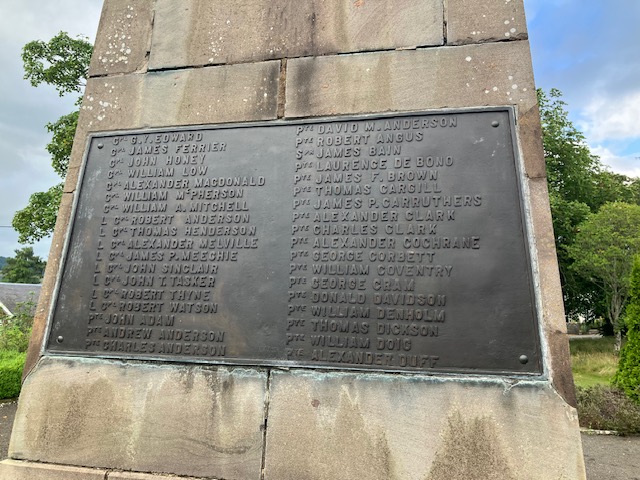
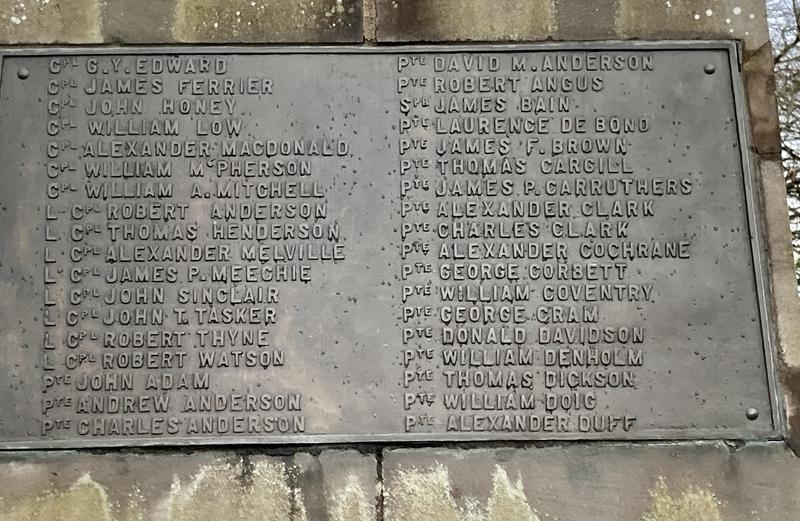
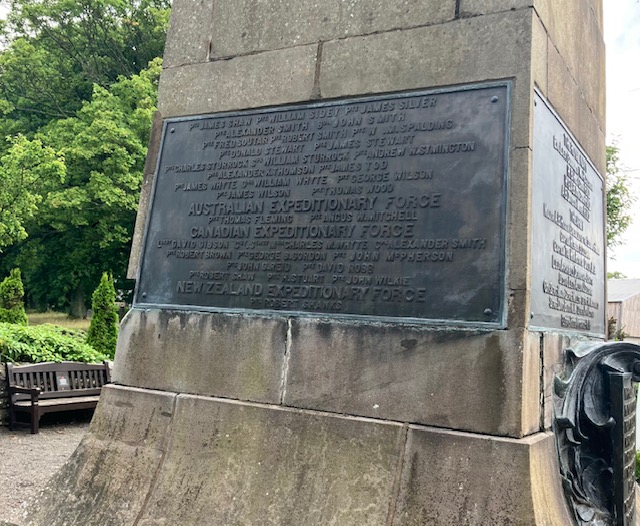
Dedication Plaque-IN PROUD AND LOVING/MEMORY OF THE MEN/FROM THIS DISTRICT/WHO DIED FOR/THEIR COUNTRY/IN THE GREAT WAR/1914-1919/THEIR NAME LIVETH/FOR EVERMORE Names Plaque above the Dedication Plaque-THE ROYAL NAVY/[names]/THE ARMY/[names of officers] Names Plaque 2-[names of officers THEN of the rank and file A-D] Names Plaque 3-[names of the rank and file E-R] Names Plaque 4-[names of the rank and file S-W]/AUSTRALIAN EXPEDITIONARY FORCE/[names]/CANADIAN EXPEDITIONARY FORCE/[names]/NEW ZEALAND EXPEDITIONARY FORCE/[name]
| Surname | First Name | Date of Death | Name of Memorial(s) | |
|---|---|---|---|---|
| Mitchell | William | 15-9-1916 | Alyth War Memorial | View |
Further information:
Find more information about a specific soldier visit findmypast. The Scots Guards are delighted that their Enlistment Books from 1840 to 1938 are now available at:

If you have information on a specific memorial please send it on to the Historical Committee. The Memorial information required is:
- Who or what formation of the Regiment is named on the memorial. What event, dates or other inscriptions on the memorial.
- The country, nearest town/city or other details of location.
- A description of the memorial with a photograph if possible.
- For bigger sites a copy of any advertising information or leaflets would be useful.
Please sent any information that you find to: Michael Campbell-Lamerton
As the information on the database builds up Michael Campbell-Lamerton will be sending regular updates to Archives at RHQ who remains the point of contact about for inquiries on past members of the Regiment.